Post-workout hydration drink
The one where the sugar is a feature, not an oversight.
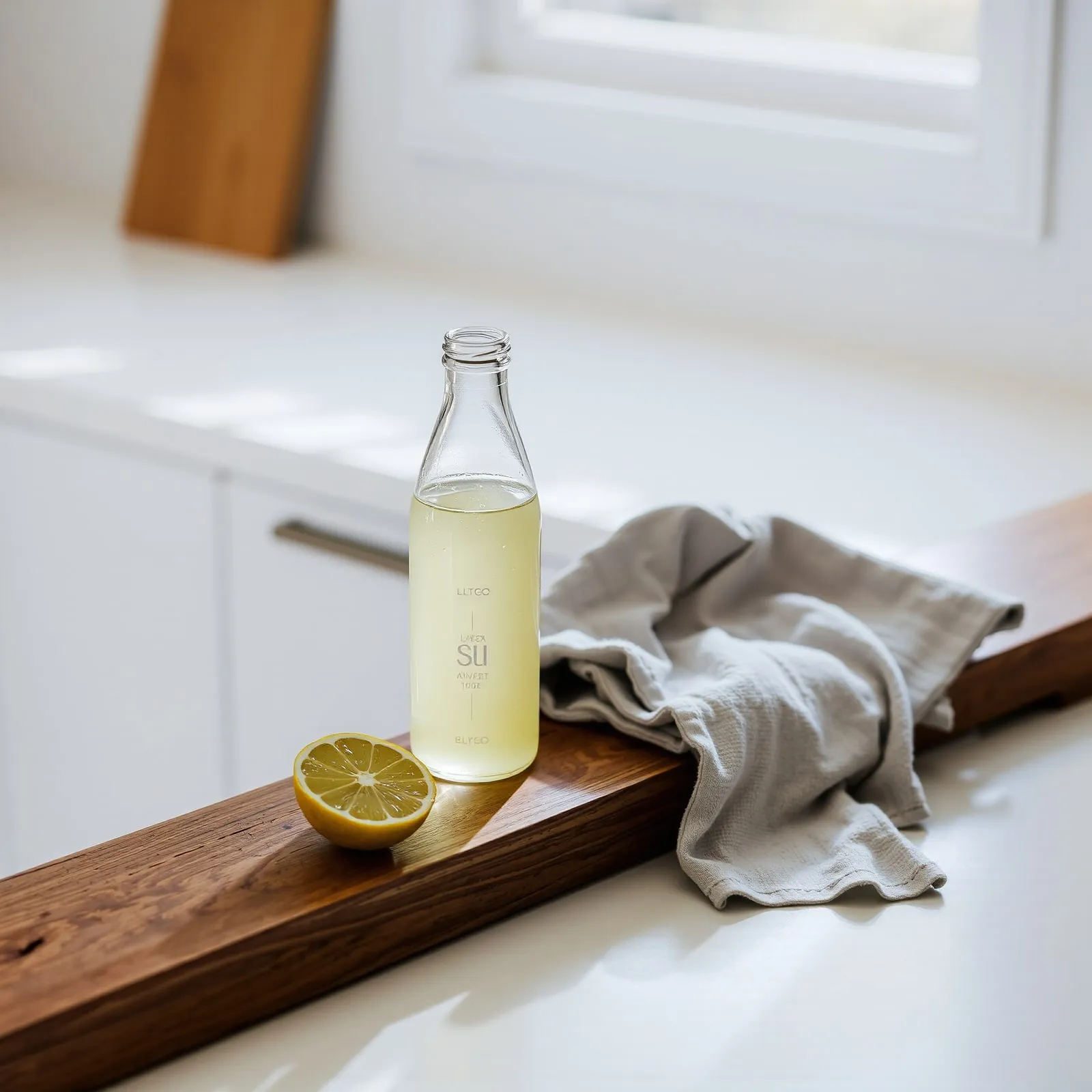
Every other recipe here treats sugar as something to minimise. This one does not, and that is deliberate: after a genuinely hard session you have burned through muscle glycogen as well as sweated out salt, and carbohydrate is how you put the first one back.
It is also not a coincidence that commercial sports drinks land around 6% carbohydrate. That concentration empties from the stomach fastest — thicker and it sits there, thinner and you are just drinking salty water.
If your workout was forty minutes of moderate effort, you do not need this. Have water.
How to make it
- Hands on
- 3 min
- Total
- 3 min
- Makes
- 1 serving
- Per glass
- 111 kcal
Ingredients
Method
-
Dissolve the salts
Put both salts and the syrup in the bottle with a splash of warm water and shake until completely clear. Undissolved salt sinks and you drink it all at the end.
-
Add the citrus
Lemon juice, then top up with cold water. The acid is not decoration — without it this tastes like sweetened seawater.
-
Chill it properly
Cold drinks empty from the stomach faster than warm ones and are far easier to get down after hard effort. Make it before you train and leave it in the fridge.
Worth knowing
- Honey and maple syrup are interchangeable. Table sugar works too and is cheaper — 30 g of it is roughly equivalent.
- Sip it over twenty minutes rather than drinking it in one go. Volume is what causes stomach upset, not the ingredients.
What it actually does for you
- Calories
- 111 kcal
- Sugar
- 25 g
- Sodium
- 595 mg
- Potassium
- 509 mg
- Magnesium
- 8 mg
The most calorie-dense drink here and the only one where that is the intention. At roughly 5% carbohydrate it sits in the range that empties from the stomach fastest, with sodium and potassium both at useful levels. Drinking this instead of water on a rest day is simply drinking 111 kcal you did not need.
How this was worked out: 1.5 g sea salt gives 590 mg sodium (salt is 39.3% sodium); 0.75 g potassium chloride gives 393 mg potassium (52.4% potassium). 40 g maple syrup adds about 104 kcal, 24 g sugar, 85 mg potassium and 8 mg magnesium; 30 ml lemon juice adds about 7 kcal and 31 mg potassium (USDA FoodData Central).
Variations
- Halve the syrup for a session under an hour.
- Swap 240 ml of the water for coconut water to push the potassium higher.

Making it is the easy part
Remembering to drink it is the hard part. Honk watches your webcam with on-device AI and honks until you do, as gently or as loudly as you like.
Meet Honk → join the waitlistQuestions
Why not make it sugar-free?
Because the sugar is doing two jobs. It replaces muscle glycogen after hard effort, and glucose actively helps your gut co-transport sodium and water — which is the mechanism behind oral rehydration therapy. For a hard session both matter. If you want the sugar-free version for ordinary days, that is a different recipe on this hub.
How does this compare to a commercial sports drink?
Favourably on sodium and potassium, and it is roughly comparable on carbohydrate. A typical isotonic drink runs about 6% carbohydrate with 230 to 500 mg sodium per 500 ml; this lands at around 5% carbohydrate with 595 mg sodium and considerably more potassium. What you lose is the flavour engineering and the convenience.