Sick-day rehydration drink
Six teaspoons of sugar, half a teaspoon of salt, one litre of water. That is the whole thing.
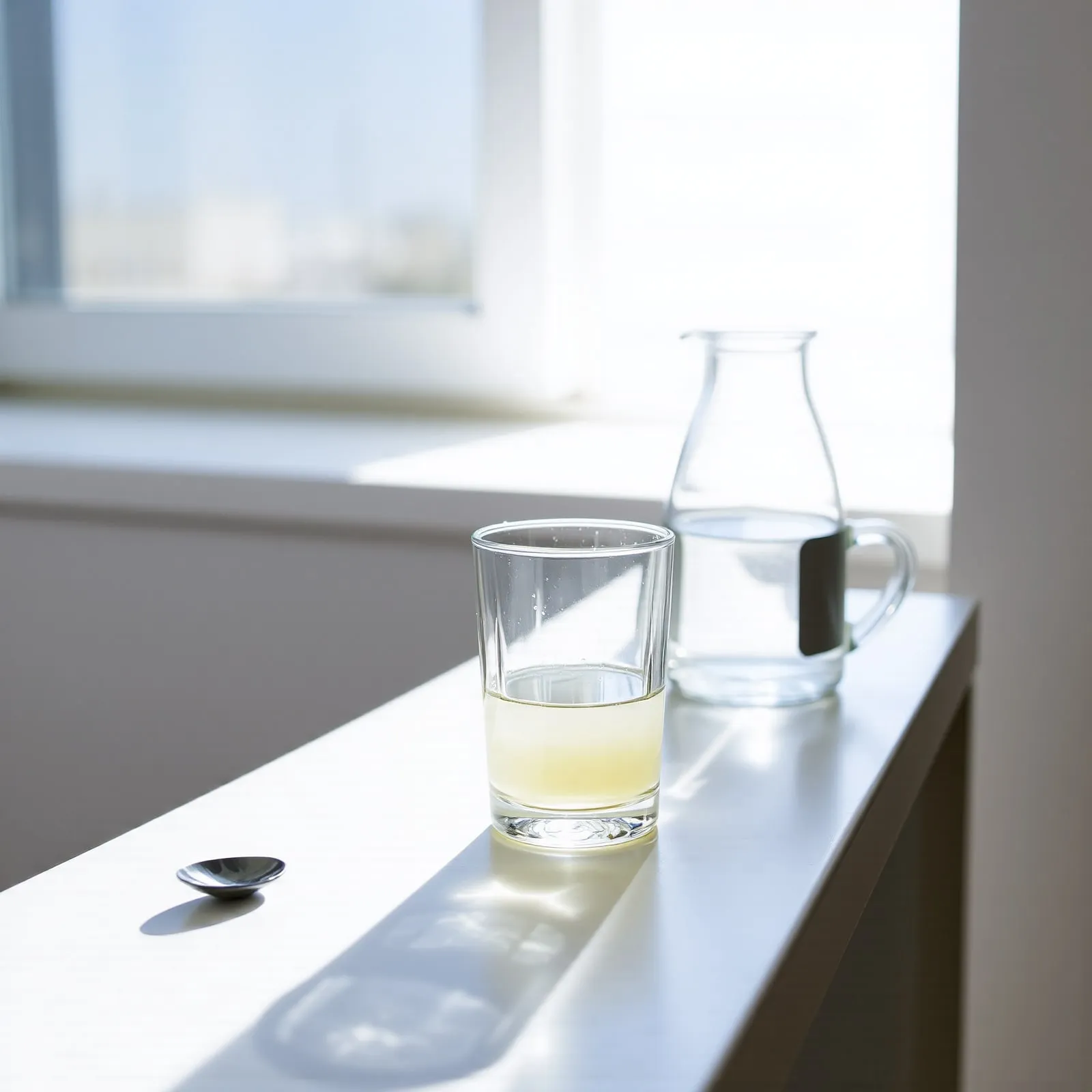
This is not a wellness recipe. It is the World Health Organization's home formula for oral rehydration, the ratio used worldwide to treat fluid loss from diarrhoea and vomiting, and it is on this list because it is the one drink here that exists for a genuine medical reason.
It works because of a specific piece of physiology: glucose and sodium are absorbed together across the gut wall, and each drags water with it. That is why it is sugar *and* salt, in that ratio, rather than either alone.
It tastes of very little, which is the point. It is not meant to be enjoyable.
How to make it
- Hands on
- 3 min
- Total
- 3 min
- Makes
- 4 servings
- Per glass
- 25 kcal
Ingredients
Method
-
Measure exactly
Use level teaspoons and a proper litre. The ratio is the medicine here — too much salt makes dehydration worse rather than better, which is the one genuine risk with this recipe.
-
Dissolve completely
Stir until you cannot see or feel any grains. Taste it: it should be no saltier than tears. If it tastes markedly salty, throw it away and start again.
-
Add potassium if you can
The home formula has almost no potassium, which the pharmacy sachets do include. A glass of orange juice or a mashed banana alongside covers it.
-
Sip slowly
Small amounts often — a few sips every few minutes — beats a glass at once, which tends to come straight back up.
Worth knowing
- A pharmacy oral rehydration sachet is better than this and costs very little. This is the recipe for when you cannot get one.
- Make a fresh litre daily and keep it covered in the fridge.
What it actually does for you
- Calories
- 25 kcal
- Sugar
- 6.3 g
- Sodium
- 295 mg
The only recipe here with a clinical basis, and the only one where the exact ratio matters rather than being a matter of taste. Its known gap is potassium — the home version has essentially none, which is why pharmacy sachets are the better option when you can get one, and why the orange juice is worth adding when you cannot.
How this was worked out: Per WHO's home-made solution: 1 litre of water, 6 level teaspoons (25 g) sugar, 1/2 level teaspoon (3 g) salt. Salt is 39.3% sodium, so 3 g gives about 1180 mg sodium per litre, or 295 mg in a 250 ml serving; the sugar gives 100 kcal per litre. Commercial reduced-osmolarity ORS sachets are more precisely formulated and include potassium.
Variations
- Add a pinch of bicarbonate of soda to bring it closer to the full formulation.
- Chill it and add a squeeze of lemon if you cannot face it at room temperature.

Making it is the easy part
Remembering to drink it is the hard part. Honk watches your webcam with on-device AI and honks until you do, as gently or as loudly as you like.
Meet Honk → join the waitlistQuestions
When should you see a doctor instead?
This recipe is for mild dehydration in an otherwise healthy adult. Get medical help rather than relying on it if there is blood in stool or vomit, if vomiting means nothing stays down for more than a few hours, if there is little or no urine for eight hours or more, if there is confusion, dizziness on standing or a racing heart, or if symptoms last beyond a couple of days. This is general information, not medical advice.
Can you give this to a child or a baby?
Not without medical advice. Children dehydrate much faster than adults and the margin for error on the salt is far smaller, so a measuring mistake matters more. For infants especially, use a pharmacy oral rehydration sachet made up exactly as directed, and speak to a doctor or pharmacist first.
Why not just drink flat cola or sports drinks?
Both are far too sugary and far too low in sodium for this job. The high sugar concentration can actually draw water into the gut and make diarrhoea worse. The WHO ratio is deliberately dilute for exactly that reason.